The Palantir Maven Smart System (MSS) is an AI-enabled military platform designed to integrate, analyze, and operationalize data across multiple domains for NATO and U.S. military forces.
Overview and Purpose
The Maven Smart System (MSS) is a sophisticated AI-driven platform developed by Palantir Technologies to support Combined Joint All Domain Command and Control (CJADC2) operations. It enables commanders and warfighters to leverage AI, machine learning, and large language models (LLMs) to enhance intelligence fusion, targeting, operational planning, and decision-making cycles across multiple services and combatant commands. MSS integrates structured and unstructured data from diverse sources, breaking down traditional silos and providing a unified, searchable operational picture.
ctfassets.net
+3
Key Capabilities
Data Integration and Analysis: MSS consolidates data from classified and open sources, enabling real-time situational awareness and operational insights.
2
Targeting and Battlespace Management: Tools like Maverick, Target Workbench, and Target Nexus provide centralized target identification and management across domains.
1
Automated Object Detection: Leveraging Broad Area Surveillance and Targeting (BAS-T) and AI Tasking Manager, MSS automates detection and alerting processes.
1
Pattern Analysis and Intelligent Alerts: The Pattern Analyzer identifies trends and anomalies to support proactive decision-making.
1
AI-Powered Workflows: LLMs and AI assistants enable natural language queries and responses, streamlining operational planning and execution.
1
No-Code/Low-Code Development: Tools like Workshop and Slate allow rapid creation of mission-specific applications using the Maven Ontology as a digital twin.
1
Third-Party Integration: MSS’s open architecture supports integration with additional AI models, simulation tools, and allied-developed applications.
2


3 Sources
Deployment and Strategic Use
NATO: MSS NATO was acquired by the NATO Communications and Information Agency (NCIA) for deployment within Allied Command Operations (ACO) at SHAPE, Belgium. The system enhances multinational interoperability, accelerates decision-making, and supports AI-enabled operational planning.
2
U.S. Military: MSS is deployed across the Army, Air Force, Space Force, Navy, and Marine Corps, supporting CJADC2 initiatives and enabling rapid sensor-to-shooter engagements. The Marine Corps has expanded MSS licensing to tactical units, enhancing intelligence, targeting, and maritime domain awareness.
2
Project Maven Legacy: MSS builds on the U.S. Department of Defense’s Project Maven, which began in 2017 to deliver AI capabilities for operational use. MSS became a Program of Record under the National Geospatial-Intelligence Agency (NGA), providing infrastructure and AI support for joint operations.
2


5 Sources
Strategic Implications
The rapid acquisition of MSS by NATO and its adoption across U.S. military services reflects the urgent need for AI-enabled operational capabilities. MSS enhances data-driven decision-making, operational agility, and interoperability while highlighting the balance between leveraging U.S. technology and pursuing European strategic autonomy. Its open architecture ensures adaptability for future AI innovations and allied contributions, positioning MSS as a central tool in modern warfighting and command operations.
Defense Update
+1

In summary, Palantir MSS is a transformative AI platform that integrates data, automates analysis, and supports decision-making across multiple military domains, providing NATO and U.S. forces with a unified, AI-enabled operational advantage.
Defense Update
+2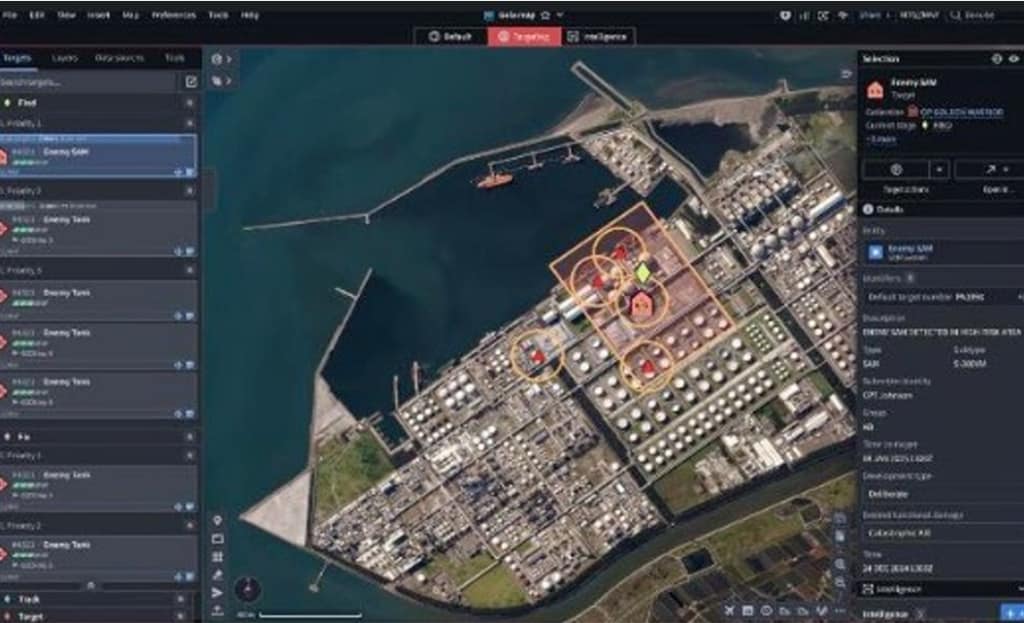
In other news:
Skunk Works and XTEND Simplify Multi-Drone Command
Tamir Eshel – Dec 18, 20250
Lockheed Martin Skunk Works® and XTEND have achieved a major milestone in JADC2 by integrating the XOS operating system with the MDCX™ autonomy platform. This technical breakthrough enables a single operator to simultaneously command multiple drone classes, eliminating the friction of mission handoffs. From “marsupial” drone deployments to operating in GPS-denied environments, explore how this collaboration is abbreviating the data-to-decision timeline and redefining autonomous mission execution.